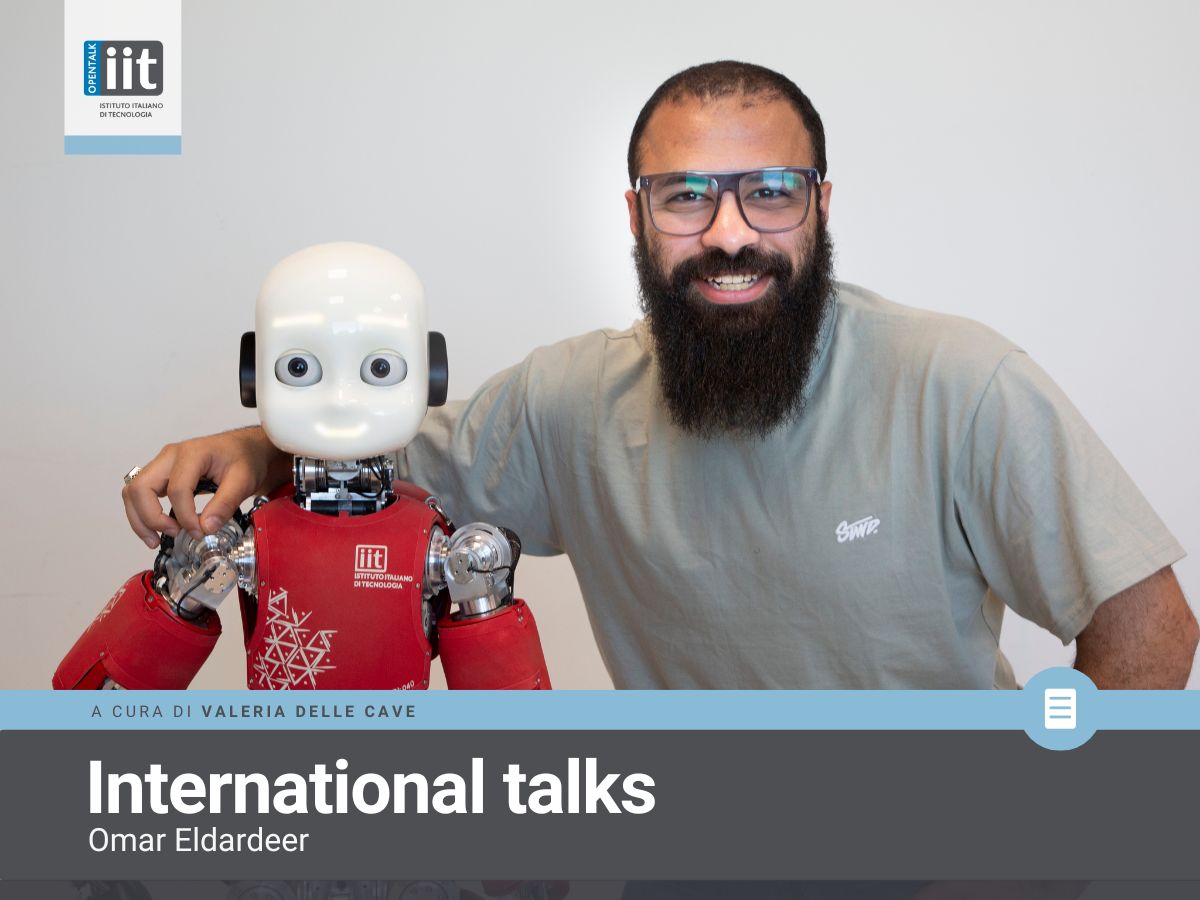
Is it about what you Achieved?
My story from the bachelor’s degree until today has been a dynamic path with many curves and turning points, it wasn’t a straight line and neither known milestones. And looking backward, it is hard to remember the technical details of the projects and activities that were done in the past. What actually remains with me is the transformation of the mindset, the experience I had with colleagues, and the resilience I built over time. These are the main aspects that define myself and form the personality of whom I am at the moment. I often ask myself: is life as a researcher what you achieved? Or is it about how we navigate our path, supporting others along the way, standing on your values, and growing into a better version of ourselves?
Everything started during my childhood. I was always curious about things around me. I used to disassemble devices just with the goal of exploring what is inside and how it works. My parents were supporting this curiosity. They were feeding this curiosity with toys, devices, and even some lab work during the summer breaks. It was obvious to everyone around how passionate I am about what I realized over time to be an engineer. It became my main target and the dream that every study year grows bigger. This passion-driven goal was motivation for excessive studying hours and resulted in high grades throughout all the school years.
In 2012, I achieved my childhood dream and got enrolled in the Engineering Faculty at Cairo University (the best public university in Egypt). A very difficult goal giving the competitive admission requirements the faculty has. Despite the fact that I chose the Electrical Energy major, I found out that I have a programming mindset and developed my programming skills throughout the five-year period of my bachelor’s degree as a side self-study. I had the chance to work as a part-time mobile developer during the last year of my bachelor’s degree in one of the biggest software companies in Egypt (ITWORX), something I aimed for to practice my skills in programming. After a very short period, I was assigned to explore different mobile development technologies and compare them to choose the best among them to be applied to the latest software products in the company at that time. A challenging task that opened my eyes to a wide range of available technologies that I never heard of at the university. A moment when I realized that there are many things to learn and explore.
I always wanted to find a place where I could use the knowledge I gained from my bachelor’s degree in combination with my passion for programming. At the same time, having experience in this exploration project at ITWORX, its fast pace and challenging nature shifted my vision towards another goal which is pursuing a higher level of education.
This shift marked a turning point in my life. I decided to invest more in my mind, not through titles or recognition, but through deeper learning. This decision led me to pursue my postgraduate studies abroad in the UK at the University of Essex in Artificial Systems and Robotics — a program that combined my undergraduate knowledge with my programming passion. A UK master’s degree is highly regarded in Egypt and pursuing it had not been part of my original plan. I never imagined I would consider a PhD. It seemed distant and unattainable until I began my master’s thesis, my first real experience in research. During this time, my thesis supervisor at the university invited by Dr. Francesco Rea from the RBCS (Robotics, Brain, and Cognitive Science) UNIT at IIT for a talk at the university. I attended the talk and had a thoughtful discussion with Dr. Rea after his talk. This was the spark that opened my mind to another goal to chase “having a Ph.D.” and it marked the beginning of a completely new chapter in my life.
I followed the work of the RBCS group and applied for a PhD position as soon as it opened, under the supervision of Dr. Francesco Rea and Prof. Giulio Sandini. My research focused on designing and implementing biologically inspired cognitive architectures for robot audio-visual perception — a highly multidisciplinary topic, while my background covered only a small part of it. The idea of doing the PhD on this topic was both exciting and terrifying. Nevertheless, it was such a great opportunity for my career. The PhD period, which lasted around three and a half years, was among the most challenging and transformative of my life. The challenges were mainly in both research and daily life. Besides that, I had to understand complex phenomena in cognitive science and neuroscience, and I had to adapt to a new country and a language I did not speak.
It is important to note that my supervisors (Prof. Sandini and Dr. Rea), the RBCS group, and also the CONTACT Unit led by Dr. Alessandra Sciutti, were the right source of inspiration and support during my PhD period and after. The dynamics of the group, its diverse nature, and the vibes of collaboration among the researchers helped me to be on track and move forward with confidence and resilience despite the difficulties and challenges of the PhD.
After my PhD, I worked on several European Union projects between May 2023 and until now. First was VOJEXT, a large project with over twenty partners from across Europe. Working in this project allowed me to collaborate with other IIT groups (EDPR) and other partners in the project outside IIT. This expanded my knowledge and understanding about how EU projects are handled and gave me a much broader perspective on industry and big research projects. I also learned that collaboration is not just about the exact research work you do together with your partners, but it is also about a lot of background activities that facilitate the execution of the activities, it is about effective communication with others, sharing respect, and the willingness to understand the point view of the other. It required a lot of patience and fixability which I developed over time. Later, I led a work package (Achievement of Scientific Excellence) on the TERAIS (Towards Excellent Robotics and Artificial Intelligence at Comenius University Bratislava) project, succeeding my colleague Dr. Carlo Mazzola after he left IIT. This twinning EU project aimed to establish Comenius University as a hub of excellence in robotics and AI. Jumping into an ongoing collaboration, coordinating with a diverse team, and contributing to meaningful results made the experience both exciting and fulfilling.
It has been about six years now in IIT. In these years, many have been achieved, publications, experiments, research visits, projects, successful collaborations, and many milestones that were an aimed target before. I look back at these achievements “which indeed I am proud of” and always think that these achievements aren’t yet complete. There is always something to improve; something could have been better. It seems that we set goals to achieve and when we reach these goals our minds shift to another goal or an improvement of the same goal with an extra effort. In my opinion, this constant pursuit of improvement is what makes a good researcher, what reflects the real value of our work, and what drives research forward.
Looking back, I don’t see my story as a list of titles, projects, or achievements, but as a process of mindset transformation and personal growth shaped with curiosity and resilience with the contribution of the people and environment around me. Achievements help to structure and shape the community, but what matters is the countless lessons learned in the hard way, the behavior that defines your virtues, and the continued pursuit of understanding. So, it is not actually about what I achieved, but more about my journey that shaped my personality and mindset.