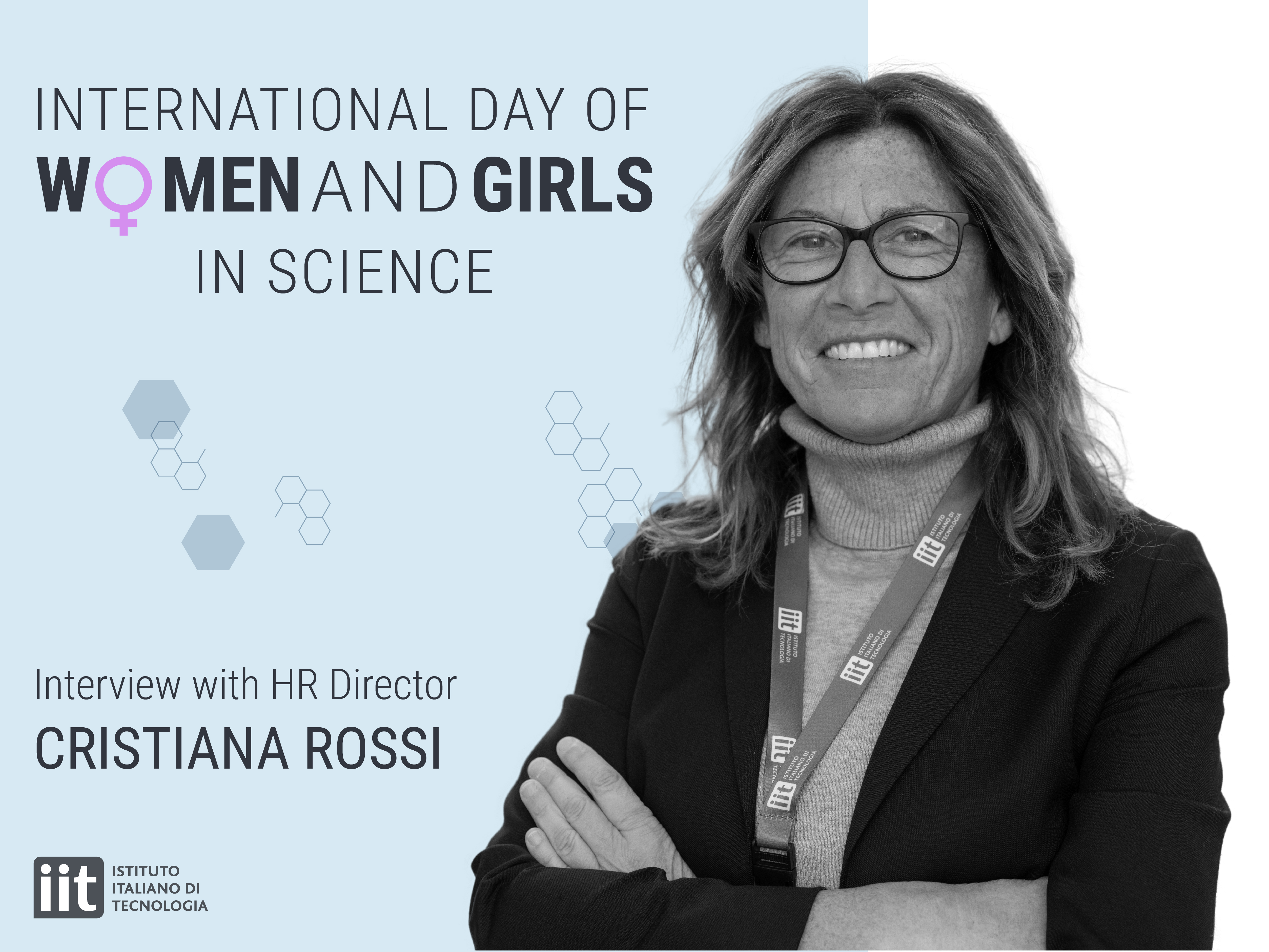
Gender equality, organizational culture and new generations: a reflection on the future of diversity in research
To mark the 2026 International Day of Women and Girls in Science, promoted by UNESCO, the Italian Institute of Technology reaffirms its commitment to fostering a research culture that is inclusive, equitable and capable of recognizing talent in all its forms.
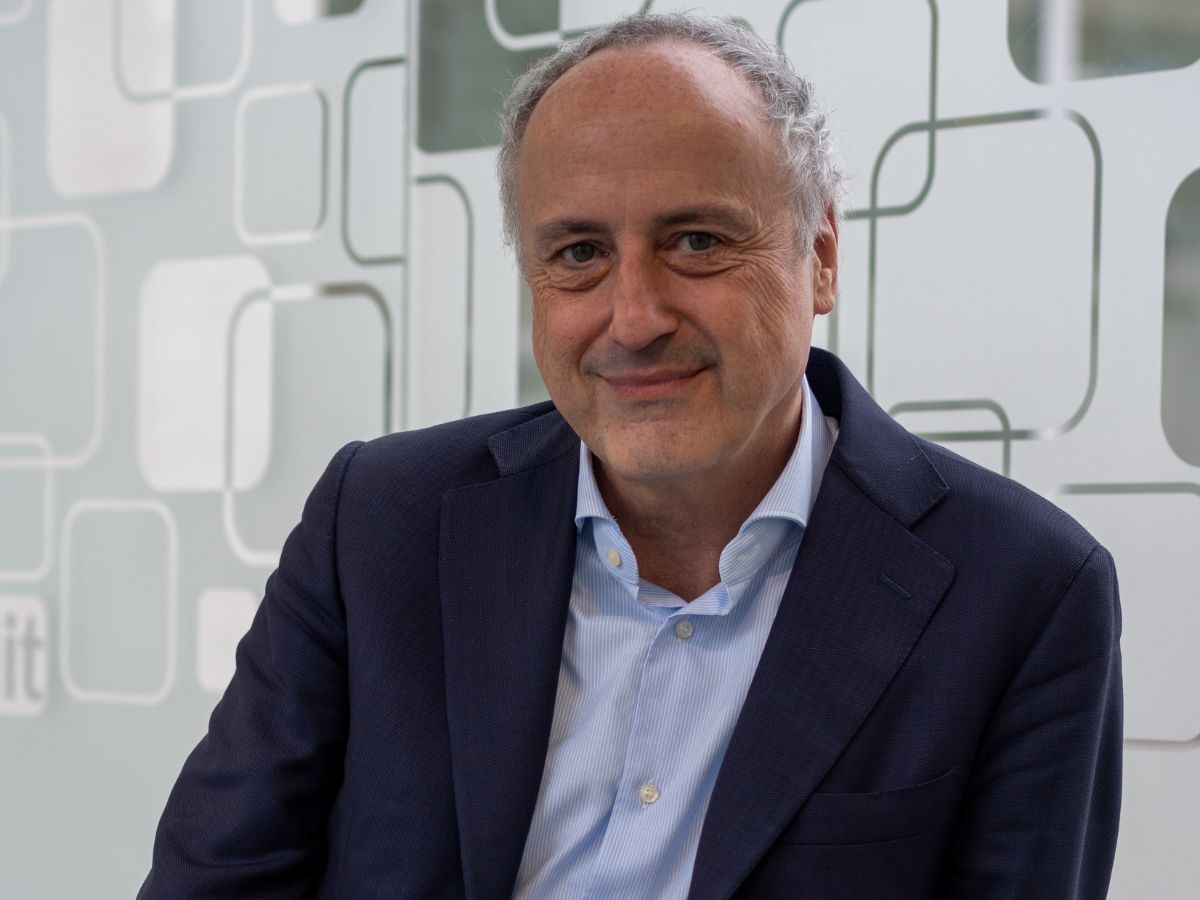
We spoke with Cristiana Rossi, who was appointed as the new Director of the Human Capital, Organization, Health and Safety Directorate of IIT in November 2025. Energetic and enthusiastic, she welcomed our invitation to be interviewed. Our conversation explored the role of women in science — not only as researchers, but also as the professionals who work alongside and support them within complex organizations. What emerged was the importance of dismantling gender stereotypes and structural barriers, while creating working environments where diversity and merit can thrive together. It was a discussion grounded in the present but firmly focused on the future and on the generations to come.
How crucial is it today to celebrate occasions such as the International Day of Women and Girls in Science to counter discrimination and gender stereotypes in the world of science and research? In a context that involves a plurality of roles and professions—from research to administrative functions and research support activities—do these occasions represent, in your view, an important moment of reflection and collective responsibility?
I believe this is an issue that deserves constant attention, not only in research and science, but across society as a whole. We could speak at length about how, at many points in both personal and professional life, being a woman has meant facing additional obstacles.
I became aware of this very early on. I was 14, in 1984, when I decided to enrol in a scuba diving certification course. It was an overwhelmingly male environment, with tough, authoritarian instructors, and my father would come along to make sure I wasn’t treated too harshly. That was when I realised it wouldn’t always be easy, and that, in certain situations, simply not being a man could make things more difficult.
Throughout my life, I often felt forced to choose between my career and my personal life. Fortunately, I see this happening far less today. At 56, I notice a clear difference in younger women: they are no longer compelled, as my generation often was, to sacrifice one dimension for the other. I wouldn’t say it’s easy now — but it is possible. In my time, it was almost inevitable.
That is why it is important to keep this conversation alive and to dedicate a day to it. Things are improving, but continued awareness and commitment are still needed.
I have worked in large corporations and multinational companies where senior leadership was overwhelmingly male and strategic meetings were attended almost exclusively by men. In those environments, however, I consistently saw how women’s contributions brought balance — particularly when discussions risked becoming overly polarised or one-sided.
In research and science, this attention remains especially important. Even today, it cannot be taken for granted that a young girl will be encouraged to pursue scientific studies. The situation is very different from when I was growing up, but it is still a crucial issue.
At the Italian Institute of Technology, by contrast, I did not encounter the same level of disparity I had experienced elsewhere. Instead, I found a far more balanced environment.
Looking at your professional career, what have been your main achievements, but also the challenges and difficulties you encountered in reaching top and executive positions as a woman? And considering these experiences, what distinctive elements characterize an organization that is truly capable of recognizing, welcoming, and addressing issues related to gender equality and inclusion, compared to contexts that still struggle to bridge the gender gap?
After graduating, I began my career in Genoa at the Cancer Institute and the Centre for Advanced Biotechnologies at San Martino Hospital, working as a researcher in the Psychology Service within the Pain Therapy Unit. In that environment, closely connected to research, I do not recall significant gender imbalances. Equality between men and women was almost a given. In research, competence tends to speak for itself: when you deliver results, gender becomes secondary, you are judged on what you achieve.
The situation can be quite different in the corporate world, where career advancement is not always driven solely by technical expertise. I have often seen senior male leaders supported by women who were more technically skilled and who, in practice, carried much of the operational responsibility. This reflects a broader cultural pattern. There is still a lingering assumption that men, perceived as more detached or rational, are naturally better suited to certain leadership roles. Experience shows otherwise. Men and women contribute different perspectives and strengths, and it is precisely this diversity that makes teams more effective.
Gender, however, is only one dimension of bias. Background, geographic origin, and life events such as illness, bereavement or motherhood can also influence career trajectories. In Italy, more so than in some other countries, these experiences have often slowed professional progression. While the situation is improving and gradually aligning with broader European standards, challenges remain. After a period of absence, such as maternity leave, people often return to find themselves disconnected from internal communications, decision-making processes and organizational continuity.
This is where organizations can make a real difference. I have worked in contexts where, with the individual’s consent, a basic level of informational connection was maintained during periods of leave. That continuity made reintegration smoother and prevented knowledge gaps for everyone involved. The tools exist; ultimately, it comes down to organizational culture.
Looking to the future and to the mission of the Italian Institute of Technology, which strategies and initiatives do you consider most effective in improving gender equality within the organization, thus contributing to increasing the gender balance indicator? In particular, which policies and practices—in terms of recruitment, career development, organizational culture, and leadership models—can tangibly support greater female representation at all levels of the Institute, from scientific roles to governance?
A great deal has already been achieved. I have always considered the Institute an extremely dynamic and appealing organization; even when I was working abroad, I followed its development with interest from the very beginning. Robotics in particular has always fascinated me, and I believe important and forward-looking initiatives have been launched here.
I have the impression that, as often happens in Genoa, many good things exist but are not sufficiently communicated outside the local area. It is as if there were a reluctance to promote what we have, in culture as well as in art and science, without a real willingness to engage in “marketing” in a positive sense. Over time, things have improved, but I believe more could be done to make the entire city more attractive. This also applies to IIT.
I believe we should work more on employer branding, to make people feel proud to work here — and many already are — and to communicate externally, including to non-scientific communities, the Institute’s extraordinary potential.
When I informed former colleagues that I would be joining IIT, many were not familiar with the Institute. Only after exploring it more closely did they fully appreciate that it represents a true center of excellence.
And in relation to the younger generations, which awareness, guidance, and science outreach initiatives do you consider most promising in bringing girls and young women closer to STEM disciplines and careers in research and technology?
I believe the same principle of greater openness also applies to our relationship with younger generations. Going into schools and bringing boys and girls closer to the world of research and innovation is essential, and we should do much more of it and communicate it better. Not only for gender equality, but also to make young graduates aware of professional opportunities that they often do not even imagine. We can offer PhDs, internships and fellowships. We are a unique international and interdisciplinary environment in Italy.
We often face a contradiction: on the one hand, we struggle to find candidates and receive few responses to open positions; on the other hand, we read that many young people say they cannot find jobs. I would like to make a concrete contribution in this area, to reduce this gap as much as possible and to enhance the potential that exists, both within and outside the Institute.
Redazione*: Valeria delle Cave and Valentina Polini