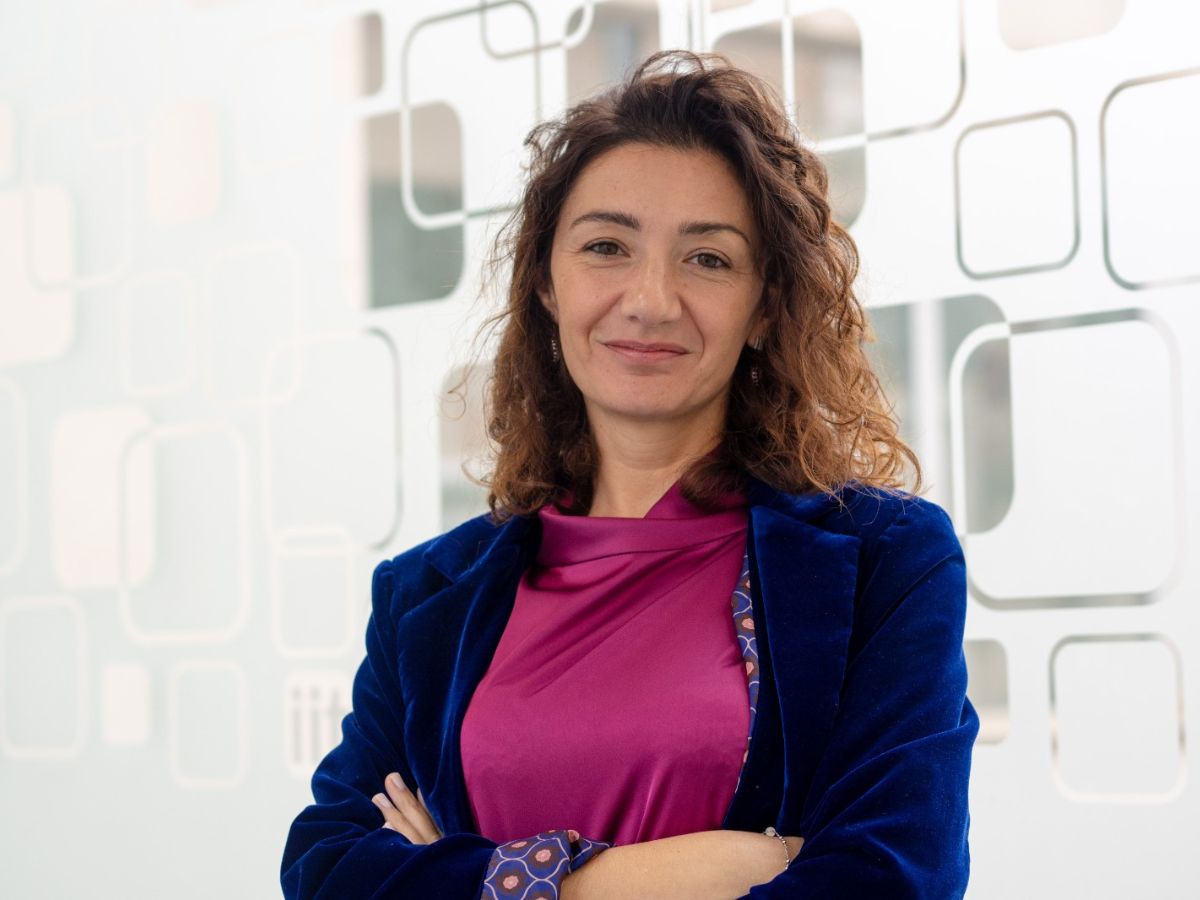
Third ERC grant awarded to Velia Siciliano of the IIT
Helping our immune system defeat cancer is the goal that drives the research of Velia Siciliano at the Istituto Italiano di Tecnologia (IIT-Italian Institute of Technology) in Naples, who has secured funding from the prestigious European Research Council (ERC) for the third time. The announcement was made today by the ERC and concerns 349 researchers in 25 European Union member states, including 17 in Italy. The Consolidator Grant, worth more than €2 million, will support Siciliano’s work over the next five years.
Velia Siciliano, originally from Naples, has been head of the Synthetic and Systems Biology for Biomedicine laboratory at the IIT Center in Naples since 2017. After obtaining her Master’s degree from the University of Naples Federico II and her PhD in Human Genetics and Bioengineering at the Telethon Institute of Genetics and Medicine in the same city, Siciliano moved to the United States to work as a postdoctoral fellow in the Department of Bioengineering and at the Center for Synthetic Biology at MIT in Boston. In 2015, she returned to Europe, to London, after winning a fellowship for young independent researchers awarded by Imperial College. In 2017, she returned to Italy at IIT.
Today’s award is the third recognition received from the ERC, following a Starting Grant in 2019 and a Proof of Concept Grant in 2024, in addition to the most recent funding from the Italian Ministry of Universities and Research (MUR) within the calls of the “Fondo Italiano per la Scienza”.
Siciliano will be able to further develop synthetic biology–based immunotherapy strategies through an interdisciplinary project involving collaborators in Italy and across Europe.
Siciliano’s field of research is synthetic biology, a discipline that is transforming cancer therapies by making it possible to program immune system cells to render them more resilient and more effective in recognizing and eliminating cancer cells. Current immunotherapies involve introducing genetic modifications into immune cells so that they function as control circuits. This strategy is used with T lymphocytes and macrophages. However, in solid tumors, the tumor microenvironment interferes with these therapies, making them dysfunctional and thus limiting their effectiveness. Velia Siciliano’s project aims to identify an innovative solution to weaken the tumor microenvironment, thereby depriving cancer cells of energy.
The project is called TeaM and integrates synthetic biology, immunology, and artificial intelligence to equip T lymphocytes and macrophages with a communication system capable of sensing the tumor’s antagonistic activity and responding through the release of localized molecules.
The project will make it possible to better understand how tumor cells defend themselves against the immune system and, at the same time, to identify new strategies for cancer immunotherapies.