The study was conducted by a group of researchers from the Italian Institute of Technology in Rome and was published in the journal PLOS Biology
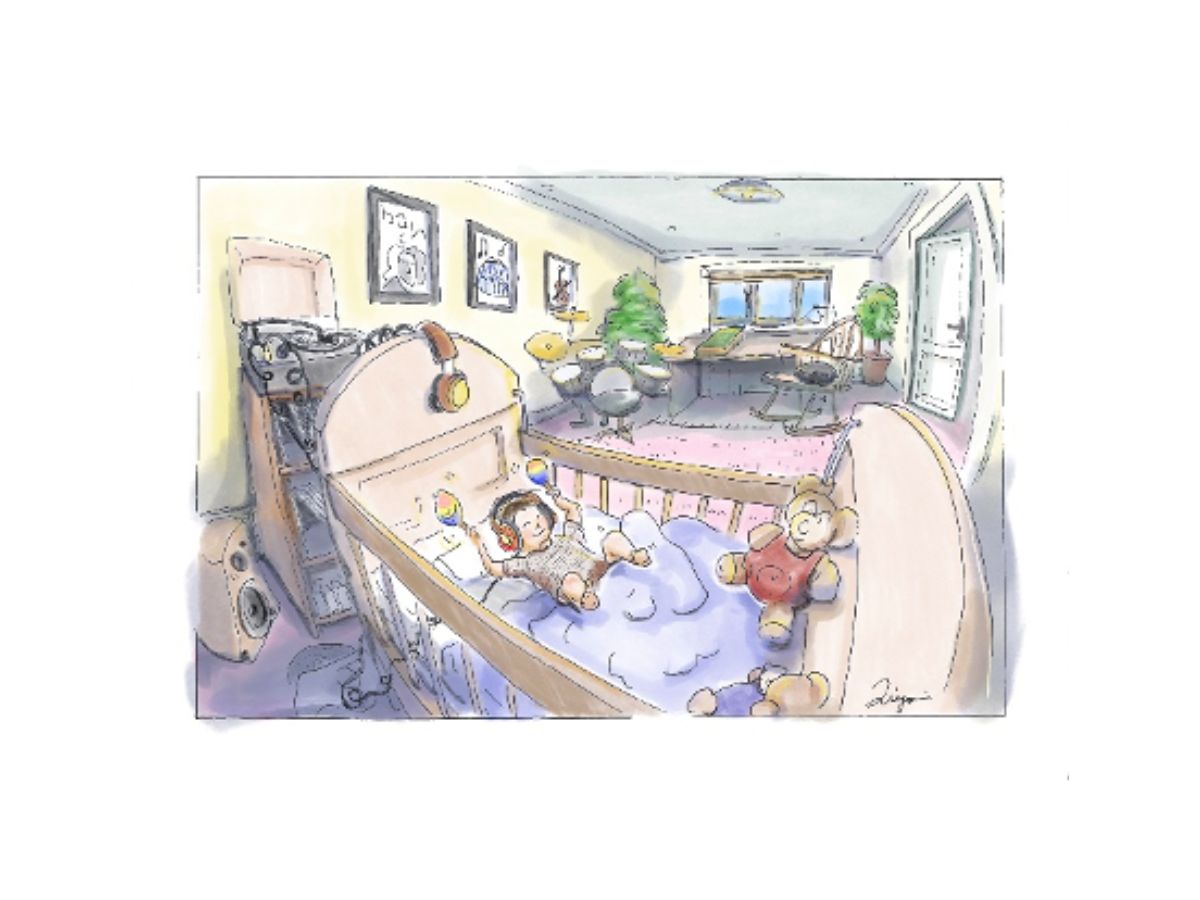
Where does music come from in our bodies, and from when are we able to perceive rhythm? A research group from the Italian Institute of Technology in Rome is investigating its neural origins, and in a study published yesterday, February 5th, in the journal PLOS Biology they demonstrated that newborns are born with the ability to predict rhythm, but not melody.
The research was conducted by Roberta Bianco, now an Associate Professor at the University of Pisa and an affiliated researcher at IIT, under the coordination of Giacomo Novembre, Principal Investigator of the Neuroscience of Perception and Action research unit at the Center for Life Nano- & Neuro-Science of IIT in Rome. The study stems from research projects funded by the European Research Council to Giacomo Novembre and by the Marie Skłodowska-Curie Actions program to Roberta Bianco.
Across all cultures, humans can inherently anticipate rhythm and melody. But are babies born with these behaviors, or are they learned? It is already known that around the 35th week of gestation, fetuses begin to respond to music with changes in heart rate and body movements. However, newborns’ ability to anticipate rhythm and melody is not yet fully understood. The IIT study sheds light on some aspects of rhythm perception.
To understand babies’ musical aptitudes, researchers played J.S. Bach’s piano compositions for a group of 49 newborns while they slept, thanks to a collaboration with the Research Center for Natural Sciences and Szent Imre Hospital in Budapest, Hungary. Musical stylings included 10 original melodies and four scrambled versions, in which melodies and rhythms were altered in their order.
While the babies listened, the researchers used electroencephalography, a non-invasive technique in which electrodes are placed on the infants’ heads to measure their brain waves. When the babies’ brain waves showed signs of surprise, it meant they expected the song to go one way, but it went another.
The newborns tended to show neural signs of surprise when the rhythm unexpectedly changed; in other words, like little maestros had generated musical expectations based on rhythm. Previously, this result had been observed in non-human primates. The researchers found no evidence that the newborns tracked melody or were surprised by unexpected melodic changes, a skill that comes at an unknown exact point later in development.
The authors add, “Are newborns ready for Bach? Newborns come into the world already tuned in to rhythm. Our latest research shows that even our tiniest 2-day old listeners can anticipate rhythmic patterns, revealing that some key elements of musical perception are wired from birth. But there’s a twist: melodic expectations—our ability to predict the flow of a tune—don’t seem to be present yet. This suggests that melody isn’t innate but gradually learned through exposure. In other words, rhythm may be part of our biological toolkit, while melody is something we grow into.”
According to the authors, understanding how humans become aware of rhythm can help biologists understand how our auditory systems develop. Future studies can investigate how exposure to music during gestation affects acquisition of rhythm and melody.