After physicist Ugo Amaldi’s appeal and Minister Manfredi’s recent statements, something seems to be moving on research funding
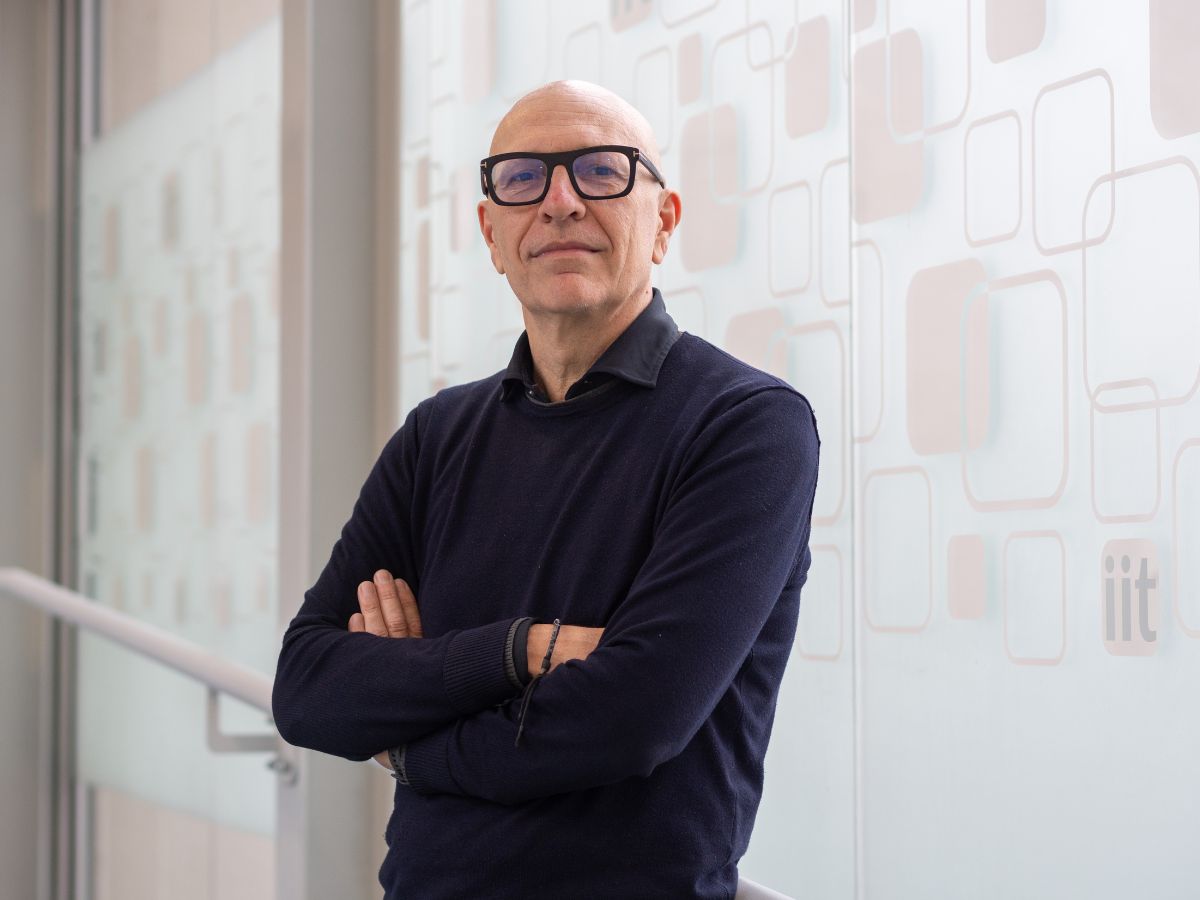
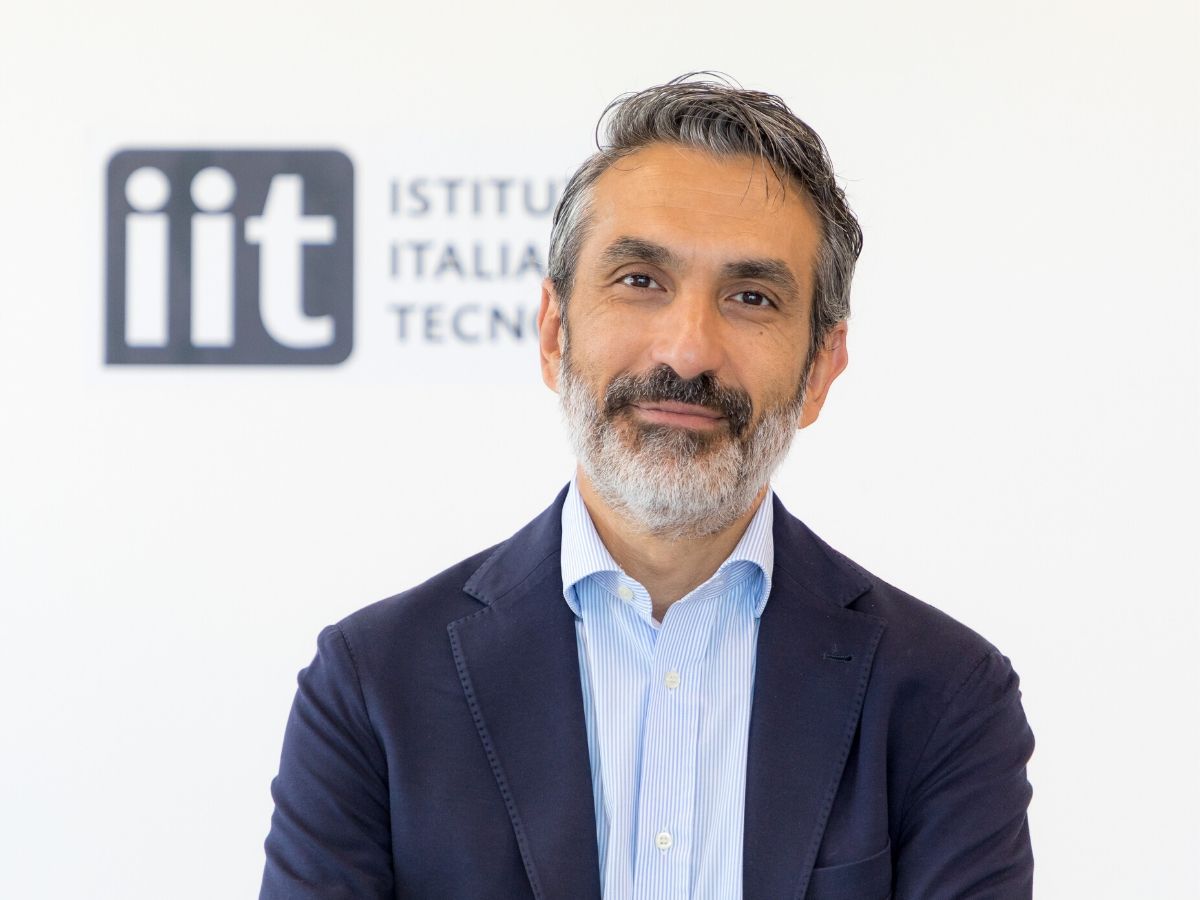
Something is happening in Italy: after physicist Ugo Amaldi’s appeal calling for a doubling of public research funding, Minister Gaetano Manfredi has promised €15 billion (over the course of five years) to finance universities and research. This is good news, which we hope will be confirmed in this difficult season of recovery from the epidemic. Besides a considerable increase in resources for the country’s scientific engine, it remains to be seen where and how to spend this money. We know that the next PRIN (Progetti di Rilevante Interesse Nazionale, Research Projects of National Relevance) call for proposals will make 750 million euro available for the next three years, for basic research. But what about the rest? Is it enough to inject more petrol, or should we also think about some modifications to the engine? We spoke about this with Giorgio Metta, scientific director of Istituto Italiano di Tecnologia (Italian Institute of Technology), who represents a structure that is to a degree unique in Italy. In fact, IIT is a large Italian public-owned research centre but with rules that bring it closer to the situation of big international research centres, both in terms of recruiting researchers and in other respects. He is therefore the first interviewee whom we asked to try imagining in which area the endowment that will apparently begin to be seen in the next national budget law should be invested.
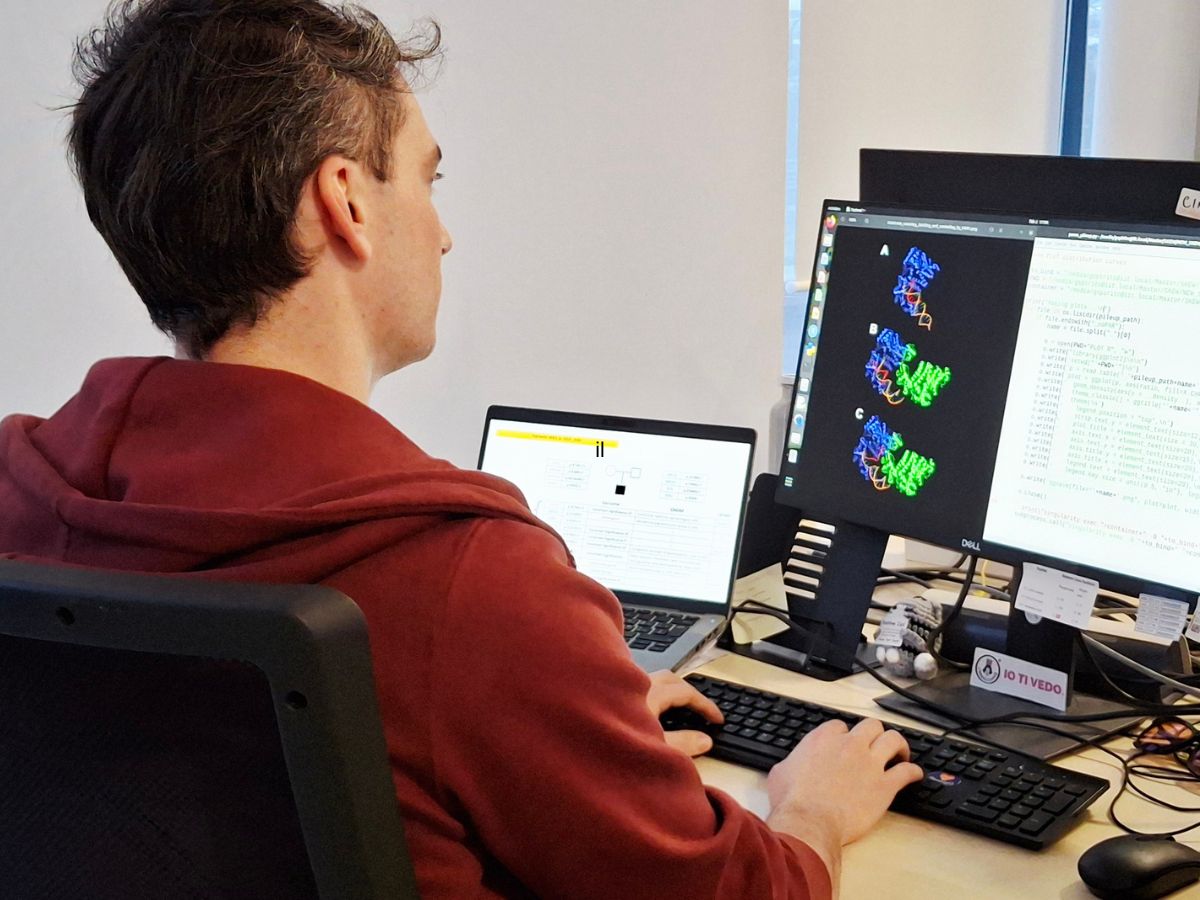
“I have to say that I supported Amaldi’s appeal and that I was delighted with Minister Manfredi’s statements. I can only refer to my own experience, which first of all suggests that we should invest both in people and in the technological infrastructure. Our research absolutely needs advanced laboratories, which have a cost and which enable competitive research. In our Computation, Materials Science and Genomics laboratories, we have recently invested in computers, very powerful microscopes and second-generation sequencing machines that make it possible to sequence a person’s entire genome at a cost of under $1,000. We have thus allocated around ten million for this equipment alone, which is a prerequisite for cutting-edge research.”
But people are important too.
Of course, both in quantity and quality. Indeed, we must prevent these laboratories, as has happened elsewhere, from becoming splendid cathedrals in the desert. This is why I say that we must also invest in people at the same time. We need to attract talent and we can only do this if we create the conditions for cutting-edge research. “Valuable” researchers are attracted not so much by the salary as by the possibility of achieving the results they are aiming for with their research. This does not mean that they should not be paid, but that they should be guaranteed a salary that convinces them to stay in Italy (the average salary of a German professor is around 80k-100k euro per year gross), and at the same time they should be given a budget with which they can organise their research project.
So no permanent employment?
Rather than stability, it is important to provide researchers with a clear programme, in-depth periodical assessment, career progression, the availability of adequate equipment, and the guarantee of independence, including economic independence, in the implementation of their research programme. Permanent posts at any cost bring the risk of consolidating choices that may turn out to be wrong. Mobility in the world of research is an important value. Without international experience, there is a serious risk of remaining too closely bound to the local situation.
Resources must also be found.
From this point of view, funding must also be of dimensions such as to reach a critical mass. Let me explain. Funding such as that provided by the ERC or an agency such as the UK’s EPSRC, let’s say one million euro, represents, especially in certain lines of research, the oxygen needed to run adequate programmes. By contrast, the piecemeal funding of multiple small sums does not create excellence. The typical funding of a PRIN (Research Project of National Relevance), 150,000 euro, for example, spread over several researchers, leads to excessive fragmentation. In fact, resources should instead be concentrated on the most promising research, both because it is strategic and because it could revolutionise entire sectors of knowledge or technology.
What structures does our country need?
I could envisage a kind of German Max Planck, with institutes focused on areas of research in which it is considered strategic to invest, with complete independence of action. The Max Planck is organised exactly in this way, not so much on a strictly subject basis, but according to themes and programmes (in Tübingen they have intelligent systems, in Leipzig evolutionary anthropology, and so on), and there is nothing to prevent the possibility that when these programmes have been completed, they can be closed in order to open up others, more in line with new research priorities. For this reason, mainly young researchers are recruited, on fixed term contracts, and with a high turnover. This type of organisation obviously requires a lot of resources, and a high number of researchers. The Max Planck has a total budget of 2.4 billion euro per year and a staff of 23,000.
Is this possible in Italy?
To a degree, Italy is already thinking about it, with projects of this kind such as that announced by the government in the field of artificial intelligence. We also have existing structures, such as the Human Technopole and IIT itself. An institute dedicated to environmental sustainability and another to quantum computing, for example, would also be important. One could start from the thematic priorities identified in the new National Research Plan (health, cultural heritage, security, sustainability, energy) and create independent institutes, that are nonetheless united by the same model and an overall control that is equally independent and high-level, exactly as in the case of the Max Planck. Mistakes in the governance concept must be avoided. IIT offers an example to be followed. It has been shown that by drawing inspiration from winning models, very important successes can be achieved.
As demonstrated by the all-too soon forgotten Colao Plan, what is also needed in Italy is a strengthening of the relationship between research and industry. How could this challenge be met?
The Italian panorama, which consists prevalently of small industries, makes this a complex task. In order to attract private funding and incentivise joint public-private research work, we should take inspiration from institutions such as the Israeli Weizmann Institute of Science, which combines basic research with a market-oriented structure aimed at technology transfer, financing proof of concept, creating spin-offs, and all those activities that lead to industrial benefits from research. There are also instruments, which are currently rather weak in Italy, such as investment funds aimed at start-ups. In this field too, however, it seems that the country system is gearing up to create the necessary conditions for increasing these operations. I think that this is an important indicator.
How does politics take these ideas into consideration?
I am pleased to see that Minister Manfredi is very attentive and responsive to these issues, he is genuinely trying to make our research more robust and competitive. The possible injection of new resources will not produce effects immediately, because research takes years to bear new fruit. Certainly Covid and the timescales of politics do not make this patient and far-sighted work any easier, but it seems to me that there is at least an awareness of seizing this opportunity to relaunch research in our country. Let us never forget that it has been shown that investment in research and economic results are united by a virtuous connection.
This article has already been published in Scienza in rete | La ricerca italiana nel mondo (Science on the web | Italian research worldwide)