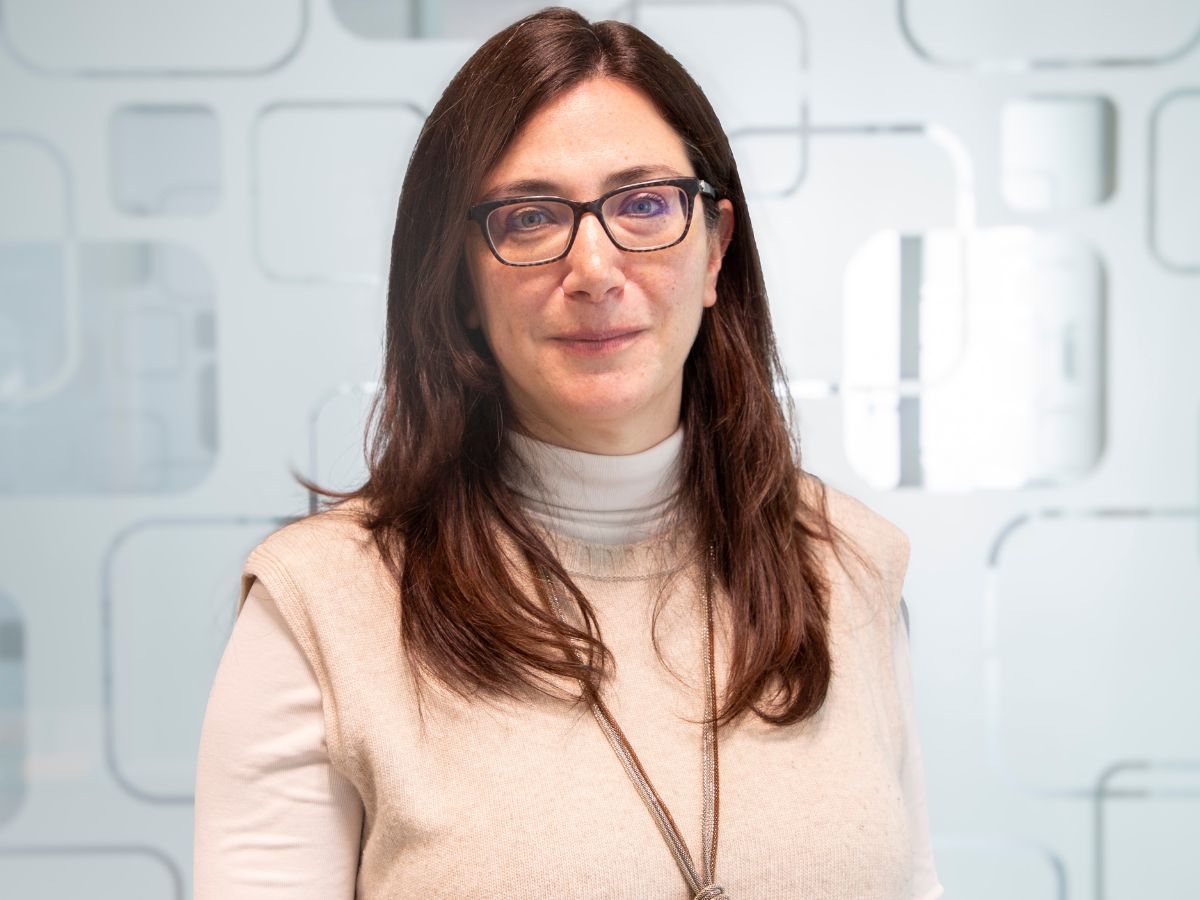
Interview with Dafne Campigli Di Giammartino, coordinator of the IIT 3D Chromatin Conformation and RNA Genomics Research line
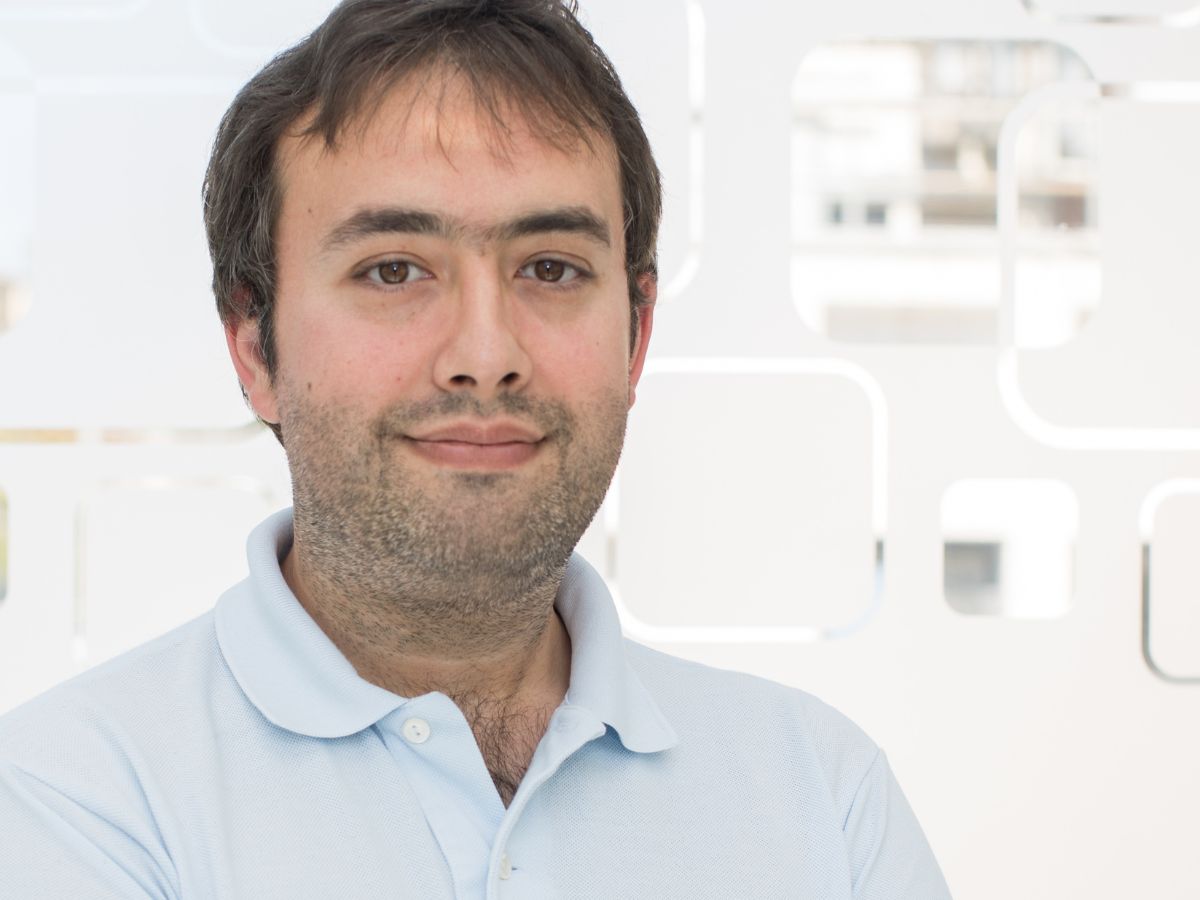
Dafne Campigli Di Giammartino, Principal Investigator at the Italian Institute of Technology (IIT) in Genoa, leads an international research group specializing in molecular biology and epigenetics. After outstanding academic training at the Hebrew University of Jerusalem, Columbia University, and Cornell University in New York, she returned to Italy thanks to a grant funded by Human Technopole. Her laboratory is at the forefront of research on the genome’s three-dimensional architecture, stem cells and epitranscriptomics, with the aim of translating fundamental biological insights into new therapeutic strategies against cancer.
What are the essential qualities for a scientist? Perseverance and creativity.
«Perseverance is crucial when it feels like nothing is working anymore», says Dafne Campigli Di Giammartino, who as Principal Investigator directs the 3D Chromatin Conformation and RNA Genomics laboratory at IIT’s Center for Human Technologies (CHT) in Erzelli, Genoa.
«In a research career there are always periods when everything seems to go wrong, when experiments fail and results don’t make sense. That’s when you need the determination to keep going: trying again, adjusting conditions, and pushing forward until you get back on track.” Yet, she notes, about 90 percent of a scientist’s work is driven by creativity. «People often don’t realize how deeply creative research actually is. The most exciting studies, the ones that open entirely new directions in science, are grounded in the ability to generate new ideas, imagine scenarios that didn’t previously exist, and connect the dots by interpreting data in ways that reveal entirely new pictures».
Is this mindset innate, or learned? Probably both. Campigli Di Giammartino credits excellent mentors for shaping her approach. «I absorbed this way of thinking – this combination of curiosity and perseverance – during my years of study. After attending a scientific high school in Rome, I completed both my undergraduate and master’s degrees in molecular biology at the Hebrew University of Jerusalem. What attracted me most was their teaching method, which immerses students in laboratory work very early on. From there, I continued my studies in the United States».
She spent sixteen years in New York, first earning her PhD at Columbia University and later working as a postdoctoral researcher and research associate at Weill Cornell Medicine. The opportunity to return to Italy came in 2021, when she was awarded a prestigious Human Technopole grant, one million euros over five years. This funding allowed her to establish her laboratory at IIT and pursue research focused on the three-dimensional organization of chromatin in stem cells. Chromatin – the material that forms the cell nucleus and contains genetic information – plays a central role in regulating gene activity. Insights from this research may ultimately contribute to new therapies for cancer, particularly brain tumors.
At the heart of Campigli Di Giammartino’s work lies a major conceptual shift in molecular biology: moving beyond the view of DNA as a linear script toward understanding it as part of a complex three-dimensional choreography. As she explains:
«When I started my lab, I brought together two lines of research: the work on RNA I had pursued at Columbia, and my later studies at Cornell on stem cells and chromatin – the combination of DNA and proteins that we might think of as the ‘control room’ of gene transcription. What really interests me today is understanding how non-coding RNAs – those that do not directly produce proteins – can influence chromatin itself and therefore regulate gene transcription. The classical model taught until a few years ago described a straightforward pathway: DNA passes information to RNA, which then produces proteins. Everything outside that scheme, the vast amount of DNA and RNA that does not code for proteins, was often dismissed as useless. Today we know that this 99 percent of the genome is anything but junk. On the contrary, it acts as the cell’s true director. RNA is not merely a messenger; it is an active regulator that constantly communicates with DNA through a molecular cross-talk that is still largely mysterious».
Is the world of non-coding RNA still largely unexplored?
«We still have a lot to learn, and that’s precisely what makes this field so fascinating. Understanding how these mechanisms work and how they shape cellular identity, even in pathological contexts such as glioblastoma is a major challenge. For decades the genome was viewed as a linear sequence, but actually it is a dynamic architecture in which form influences function. To navigate this new genomic landscape, we need to identify the key pillars of this regulation. Two major players are non-coding RNAs – molecules transcribed from DNA that do not become proteins but remain associated with chromatin to orchestrate its behavior – and enhancers, non-coding DNA regions that function as genetic “switches”. Enhancers activate promoters, the “on/off” regions that initiate gene transcription. One of the major breakthroughs in our understanding has been the discovery that enhancers can control genes located very far away along the DNA strand. They can activate genes hundreds of thousands of bases away in the linear sequence, yet these regions become physically close because of the folding of chromatin in three-dimensional space. This means that a cell’s fate does not depend only on which genes it carries, but also on how distant regions of the genome come together to switch those genes on or off. One of the goals of my research is to show that specific non-coding RNAs help mediate this three-dimensional communication».
Have advances in DNA sequencing technologies played a role in these discoveries?
«Yes. In recent years, the development of new technologies such as Hi-C and related methods, combined with large-scale sequencing, has allowed us to take an evolutionary leap: from reading the genome’s sequence to visualizing its spatial organization. We can now map the physical proximity between genomic regions that are far apart along the DNA strand, revealing that spatial position can be more informative than linear sequence in determining a cell’s identity. This three-dimensional organization is not random: it follows a precise choreography, and when that choreography is disrupted, disease processes can emerge».
Are you studying these mechanisms in glioblastoma as well?
«Glioblastoma, the most aggressive brain tumor and one of the most difficult to treat, remains an enormous challenge in oncology, with little therapeutic progress over the past fifteen years. In my lab we are tackling it by analyzing tumor cells derived directly from patients, trying to characterize their genomic and epigenomic features as deeply as possible. In doing so, we have identified what we call “3D hubs” within tumor cells-genomic command centers, where a single enhancer simultaneously contacts multiple genes, including some involved in tumor proliferation. Silencing one of these hubs using technologies such as CRISPR could potentially shut down an entire network of genes driving tumor growth. This strategy could offer a way to bypass the limitations of conventional therapies. In the future, we also hope to correlate the presence of specific gene clusters with disease aggressiveness, potentially turning these discoveries into diagnostic and prognostic tools».
Your research also involves stem cells?
«Yes. Among other things, we study cancer stem cells, cells that maintain a pluripotent state, allowing them to reproduce indefinitely and regenerate tumors after treatment. In this case as well, 3D hubs appear to act as regulatory “drivers” that keep these cells locked in an undifferentiated, aggressive state. We investigate which genes are involved in this process, because understanding them could eventually lead to ways of blocking these mechanisms and halting tumor progression. Starting in 2025, I also received funding from the FIS2 program of the Italian Ministry of University and Research for a project focused on understanding how non-coding RNAs regulate gene expression in mouse embryonic stem cells – 1.3 million euros over three years».
Beyond cancer, your laboratory also explores the emerging field of epitranscriptomics. Could you explain what that involves?
«For us, this is a relatively new research direction. Epitranscriptomics focuses on chemical modifications of RNA that alter its function without changing its sequence. These mechanisms have been studied extensively in coding RNAs, but far less in non-coding RNAs. Yet they are equally important there, because they can modify how these RNAs function; and, as we’ve seen, non-coding RNAs play fundamental regulatory roles. Understanding how these modifications are controlled will allow us to read the instruction manual that governs cellular identity and behavior—and to understand what happens when that balance is disrupted in disease».