Interview with Manuel Catalano, coordinator of the IIT NuBots – Physical AI Technologies for Human-Robot CoEvolution Research Line
Softer robots can make a real difference in people’s lives. From prosthetic hands and feet that replicate natural movement to humanoid robots assisting healthcare professionals, and intelligent machines designed for manufacturing, agriculture and the recycling of complex materials, soft robotics is redefining how humans interact with technology. Manuel Catalano, mechanical engineer and Scientific Coordinator of the NuBots research unit at the Italian Institute of Technology, explains why the key lies in taking inspiration from the human body and how this new approach is making robots safer, more intuitive and better suited to supporting us both at work and in everyday life.
When we picture a robot, “soft” is rarely the first word that comes to mind. We tend to imagine gleaming metal surfaces, rigid limbs and mechanical joints. After all, robotics has long been associated with the “hard” sciences—physics, engineering and computer science.
But there is another side to robotics, one that begins with softness.
This is the world of soft robotics.
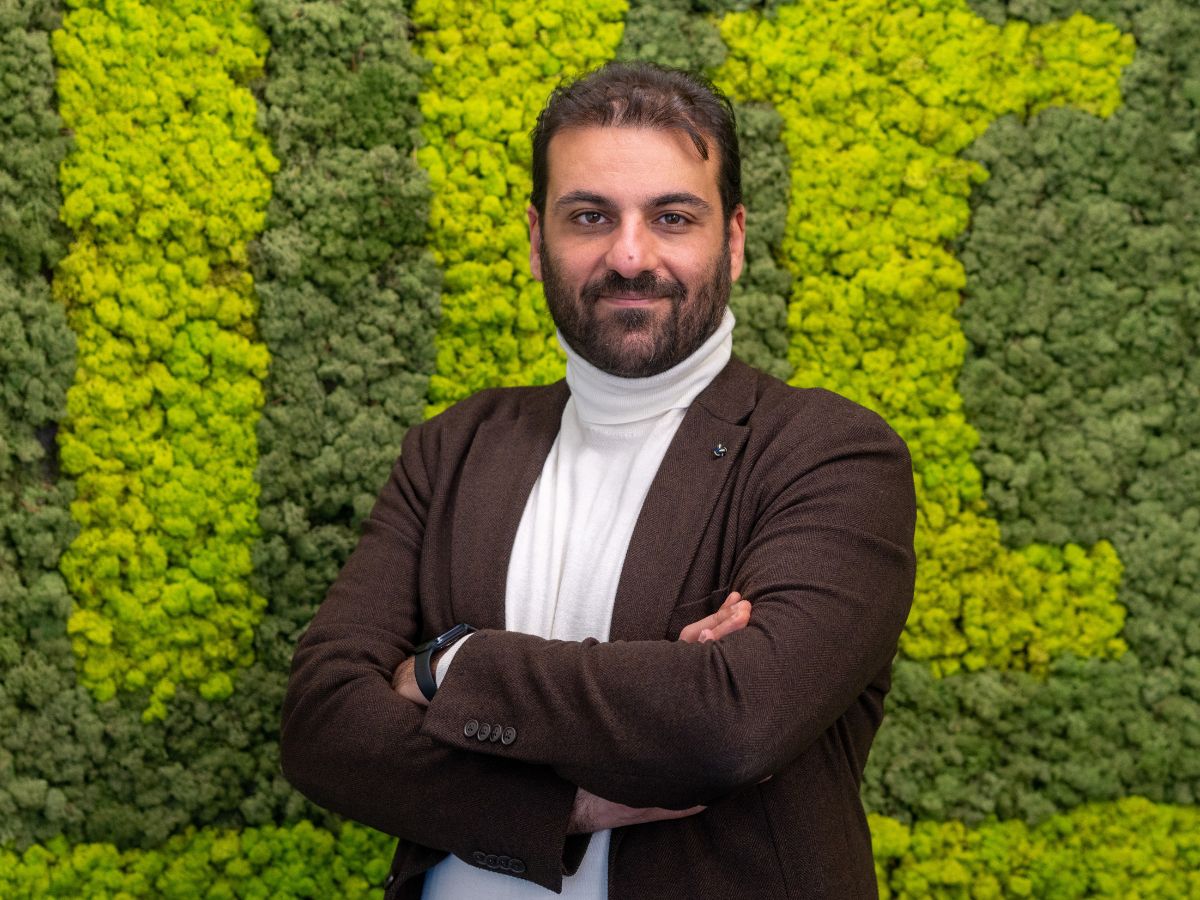
To explore it, we spoke with Manuel Catalano, a mechanical engineer with a PhD in Robotics and Bioengineering from the University of Pisa, now Scientific Coordinator of the NuBots research unit at the Italian Institute of Technology. At the heart of his work lies a passion: to make robots soft, so that they can interact with us humans more safely, effectively… and even pleasantly.
Catalano’s research has focused primarily on two areas: prosthetic devices and humanoid robots.
In both cases, he says, everything starts with the same principle: «We observe nature, understand how it works, and translate its underlying principles into technology. The human body isn’t rigid. It’s made of muscles and tendons, which are elastic: they’re soft. We rely on those properties every time we interact with the world. If you’re designing something that has to work alongside the human body, taking those characteristics into account is essential».
You began exploring these ideas during your doctoral research at the University of Pisa, where you developed one of the first versions of the Pisa/IIT SoftHand, a soft robotic prosthetic hand. What makes it different from conventional prostheses?
«From the very beginning of my research, I’ve been interested in developing robotic technologies that can be applied both to people, as prosthetic devices, and with people, through service robotics, industrial robotics and collaborative machines. My goal has always been to create technologies that can truly become part of everyday human life. The Pisa/IIT SoftHand is built around the central idea of soft robotics: studying nature and translating its mechanisms into technology. Think about the way our muscles yield under pressure, or how muscles and tendons allow us to perform both powerful and delicate movements. Think about how our hands naturally conform to the shape of the objects they grasp. My research aims to reproduce these characteristics in artificial systems.
The Pisa/IIT SoftHand – which we’ve also released as open-source technology so that anyone can build on it – features a number of joints comparable to those of a human hand. More importantly, its mechanical structure adapts to the shape of whatever it comes into contact with, allowing it to perform remarkably natural movements».
Do you also work with materials?
«Yes, the materials themselves also play a crucial role. Alongside plastic and aluminium, we use natural and vulcanised rubber to recreate the elasticity of the human musculoskeletal system within the joints. Rubber also provides a more natural tactile sensation when used as an artificial skin.
The closer an artificial system comes to replicating the properties of the human body, the more intuitive it becomes to use, and the more readily users accept it as part of themselves».
Your team has applied the same principles to prosthetic feet as well.
«Yes. The same philosophy led to the development of the SoftFoot, an artificial foot with an adaptive sole that behaves much like a natural human foot.
Most prosthetic feet available today are essentially flat or bow-shaped structures that remain largely rigid. The human foot, however, constantly adapts to the terrain beneath it. When it encounters an obstacle, it wraps around it to a certain extent, increasing stability and balance. By reproducing this behaviour in a robotic system, we’ve developed prosthetic feet that are flexible rather than rigid, much closer to the biomechanics of the natural foot. That allows users to perform movements that would otherwise be difficult or impossible.
Take something as ordinary as bending down to tie your shoes. To do that, you naturally flex the opposite foot. With our prosthesis, that movement becomes possible again. Enabling more natural behaviour means going beyond simply replacing a missing limb: it means restoring the functions that were lost with it».
And what about the development of robots?
«What’s fascinating is that the relationship works both ways. By learning how to build better prosthetic devices, we discover how to give robots more human-like capabilities. And by studying robots that move and interact more like people, we can apply those advances back to prosthetics. One of the clearest examples is Alter Ego, a humanoid robot developed through a collaboration between the Italian Institute of Technology and the Piaggio Research Center at the University of Pisa. Equipped with the Pisa/IIT SoftHands, Alter Ego features arms driven by variable-stiffness actuators that reproduce the elasticity and adaptability of human muscles. Obviously, no one mistakes it for a human being, but because its movements and physical behaviour resemble those of the human body more closely, people tend to perceive it as reassuring rather than intimidating. That creates a greater sense of comfort and makes them more willing to interact and work alongside it».
Is it already in use?
«Today, it is being tested in two real-world pilot projects. One takes place at the IRCCS Maugeri Hospital in Milan, where the robot supports healthcare professionals in the ALS ward. The other sees Alter Ego welcoming visitors and providing guided tours at the Temple of Hadrian in Rome, in collaboration with the Rome Chamber of Commerce.
At Maugeri, we conducted a study to explore how introducing this type of humanoid system could benefit not only patients – which is, of course, the ultimate goal of all this work – but also the people who care for them: healthcare professionals, nurses, physiotherapists, doctors, and other clinical staff. Taking all these different roles into account, we looked at the day-to-day tasks in which Alter Ego could provide meaningful support. The idea is not to replace people, but to understand how these technologies can help transform the way they work, making their jobs easier and more comfortable.
Alter Ego can take over tasks that are time-consuming but do not necessarily require the direct presence of a healthcare professional, for example, delivering everyday objects or administering routine questionnaires to patients. It can operate either autonomously as a robot or in teleoperated mode as an avatar, reproducing the operator’s movements through a virtual reality system that tracks body motion. This enables a person to control the robot remotely, and the experience becomes even more intuitive when the avatar closely resembles a human being. In this way, Alter Ego could also be used to provide support in the patient’s own home».
And what do patients think about it?
«The interesting thing about this trial is that it has emerged that patients, too, found it useful: for example, to have an object passed to them – think of a small bottle of water – without having to call on a nurse every time».
Have you also studied the use of humanoid robots in other work contexts?
«Yes, we are exploring how robots can be integrated into a range of work environments. One example is our collaboration with companies in the manufacturing sector. At IIT, I coordinate the JOiiNT LAB in Bergamo, a laboratory co-funded by the INTELLIMECH business consortium. There, we study how robotics can be integrated into companies’ production processes and products. This means rethinking what a factory might look like with robots working alongside people, how humans and robots can collaborate effectively, how robotics can improve production processes, and where these technologies can have the greatest impact.
It is in this context that we developed Frasky, a robot whose potential we have also explored in vineyards. What makes it unique is that it can be used throughout the entire grape-growing cycle, rather than only during harvesting. By combining robotics with artificial intelligence, Frasky can monitor the vines, spray treatments, and manage irrigation, carrying out each task with the level of precision required for individual grape clusters. Today, tools like this are becoming increasingly important because they can take over repetitive, physically demanding tasks with limited added value. This is one of the key challenges currently shaping the future of work, both in Italy and internationally, and it is just as relevant in vineyards as it is in industrial settings».
Recently, you have also been applying your expertise in flexibility to a completely different kind of problem
«Yes, I am currently coordinating the FlexCycle project, funded by the European Commission to the tune of around 8 million, which involves many partners across Europe, both industrial and non-industrial. The aim is to find new technologies for recycling soft materials, which make up a large proportion of waste and are not currently recycled efficiently; in fact, they are often incinerated. Take textiles and clothing, for example. They are difficult to recycle because buttons, zips and other accessories must be removed before processing, a labour-intensive and time-consuming task. Or consider the kilometres of electrical cables that result from the refurbishment of large buildings… handling this type of material is extremely difficult; it really is a new challenge for robotics. We’re drawing on all our expertise in flexibility, which is useful both for gaining a better understanding of how this material behaves and for developing the most suitable tools to handle it and send it for recycling. It’s a project that has only just begun – a new field open to many developments».