The report of the meeting organised by the European network euROBIN (European Excellence Network on AI-based Robotics) in the Yehudi Menuhin Hall of the European Parliament in Brussels
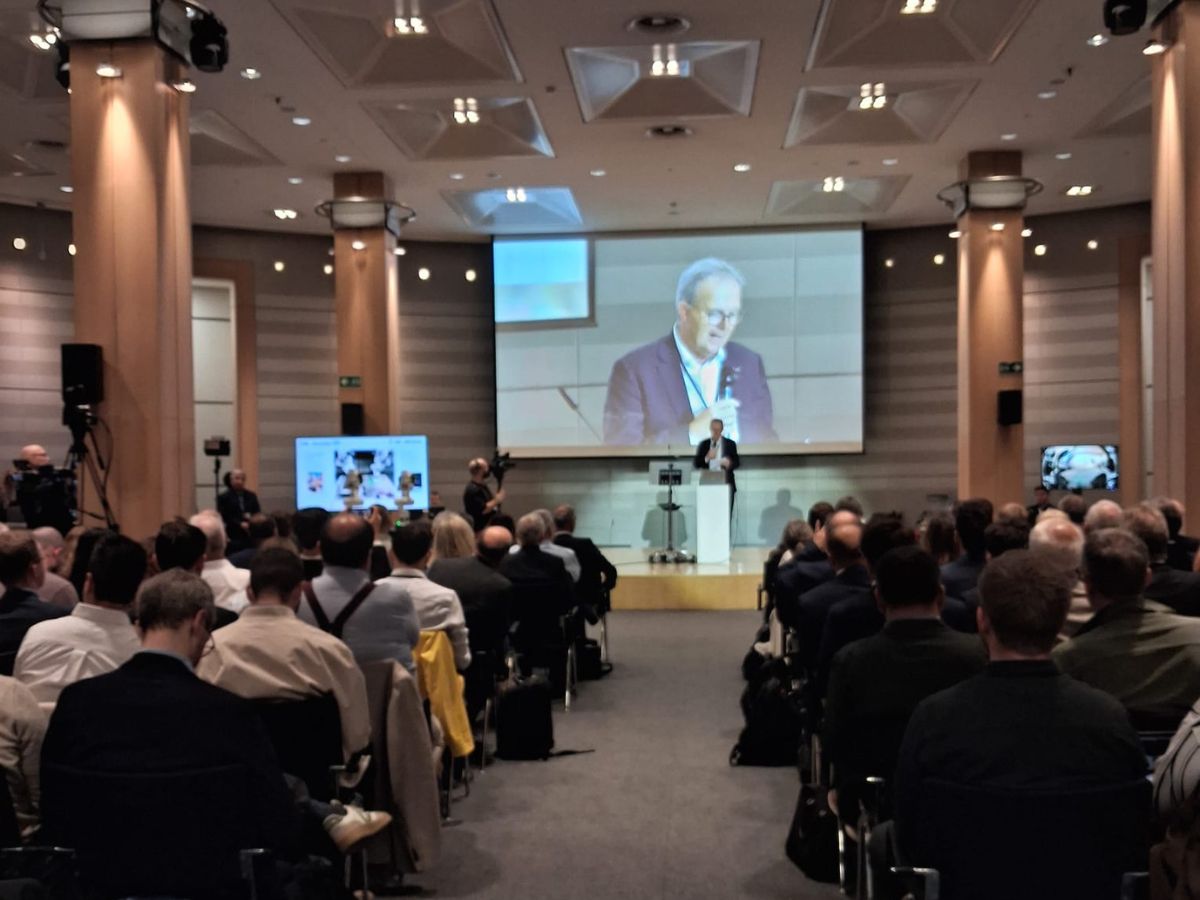
Companies, the research community and policymakers united by a shared goal: creating the conditions for AI-based robotics to become a strategic market for Europe, as the automotive sector once did, enabling the continent to compete with the United States and China. This was the central issue addressed yesterday, 2 September, at the meeting organised by the European network euROBIN (European Excellence Network on AI-based Robotics) in the Yehudi Menuhin Hall of the European Parliament in Brussels.
The event brought together 170 senior representatives from European politics, research and industry. IIT was represented by its Scientific Director Giorgio Metta and Senior Researchers Antonio Bicchi and Nikolaos Tsagarakis, together with members of Tsagarakis’s team. IIT spin-off Generative Bionics also took part, represented by CEO Daniele Pucci, demonstrating Europe’s ability to translate high-level research into new businesses. Other guests included Bruno Siciliano, Full Professor of Control and Robotics at the University of Naples Federico II; Cécile Huet, Head of the Excellence in Artificial Intelligence and Robotics Unit at the European Commission’s AI Office; and Lucilla Sioli, Director for Artificial Intelligence and Digital Industry at the European Commission’s DG CONNECT.
The opening session featured remarks by Alin Albu-Schäffer, scientific coordinator of the euROBIN network and Director of the Institute of Robotics and Mechatronics at the German Aerospace Center (Deutsches Zentrum für Luft- und Raumfahrt – DLR); German politician Axel Voss, Member of the European Parliament (MEP), who hosted the event; Alessandro Chiocchetti, Secretary-General of the European Parliament; and Thomas Skordas, Deputy Director-General of the European Commission’s DG CONNECT. Each speaker stressed the need for greater financial commitment and a long-term strategic agenda, recalling developments that have reshaped the European robotics industry: the transfer of European companies KUKA and ABB to Chinese and Japanese ownership, respectively.
“Europe can do robotics – we’re demonstrating that impressively here. Now we need to ensure that European cutting-edge research also produces European market leaders. If AI and robotics are set to define the next major industrial revolution, we must not allow a repeat of the situation where the key technologies are developed here but commercialised elsewhere. We need fewer barriers, greater momentum and better conditions for investment and scaling,” said MEP Voss, who was elected in Germany for the CDU and belongs to the European People’s Party (EPP) Group.
“We want to show that there is an exceptionally strong robotics and research ecosystem: Europe and Italy can still compete in this international race in physics and artificial intelligence. We have the means and the expertise; now is the time to turn results into real-world applications,” said Giorgio Metta, IIT’s Scientific Director.
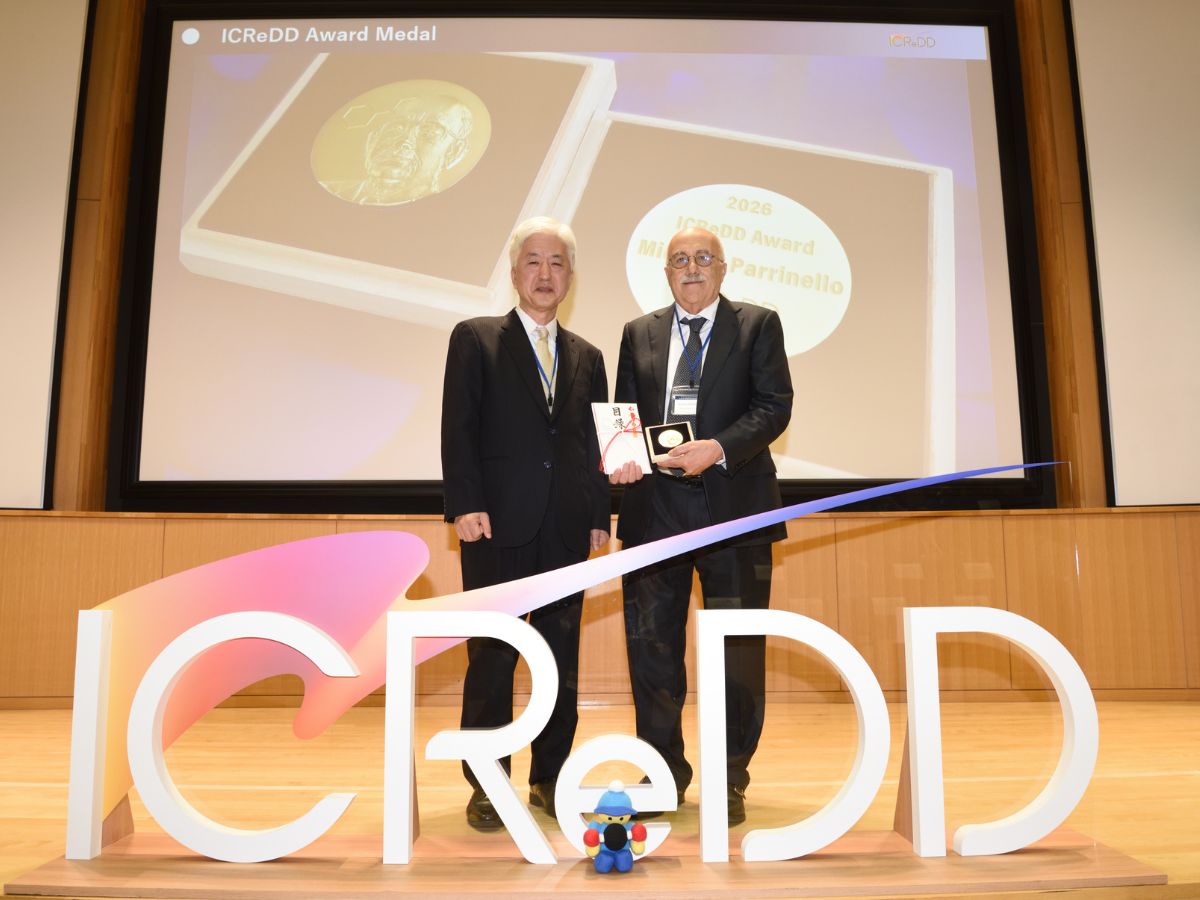
The European Union is a world leader in robotics research and continues to outperform the United States and Asia in several areas. Both research centres and companies across Europe include pioneers in the field. For example, Antonio Bicchi received the prestigious 2025 IEEE Pioneer in Robotics and Automation Award last year for his pioneering contributions to robotics.
The most significant advances have been achieved in collaborative robots, robotic avatars, autonomous navigation, dexterous robotic hands, legged robots and aerial robotics.
This excellence was demonstrated through 15 robotic systems, grouped according to their potential applications in three areas of particular economic and social relevance: industrial manufacturing and production within a circular-economy model; assistance for people in their daily lives to improve their well-being; and logistics and transport activities to make communities more sustainable.
Among the robots presented and operating at the event was Kyon, a new IIT quadruped robot capable of moving both on wheels and on legs, adapting to different terrains. It was developed by the Humanoids & Human Centered Mechatronics Lab, led by Tsagarakis. Also on display were GENE01, the humanoid robot by IIT spin-off Generative Bionics, unveiled globally at CES 2026 in Las Vegas in January; Thiago Pro, developed by France’s INRIA; Rollin’ Justin, developed by Germany’s DLR — both acting as domestic assistants — and Transformer, developed by ETH Zurich in Switzerland.
The robot demonstrations were followed by a closed-door discussion on the measures needed to build, over the next 10 to 15 years, a European AI-based robotics industry comparable in scale and importance to today’s automotive industry.
The event provided input for defining the European Union’s future strategic directions, which the scientific and business communities hope will soon be translated into a concrete investment programme. Such a programme should not only foster an ecosystem for developing new products, but also create a genuine market. Support from the European Parliament and the European Commission will be essential.
The event was promoted by the European Network of Excellence euROBIN (European Excellence Network on AI-based Robotics), funded by the European Union’s Horizon Europe Framework Programme. The network includes 31 organisations from 14 EU Member States, based in 26 cities, as well as 38 additional partners funded through the cascade funding mechanism.